Table of Contents:
- The Problem: Why Patients Choose Wrong Resurfacing Treatments
- What to Consider: Understanding Each Technology’s Mechanism
- How to Choose: Matching Treatment to Specific Concerns
- MD Spa’s Resurfacing Treatment Excellence
- Frequently Asked Questions
The Problem: Why Patients Choose Wrong Resurfacing Treatments
The “Instant Glow” Marketing Deception
The facial treatment industry generates $4.2 billion annually through promises of “instant transformation” and “red carpet ready” results, deliberately obscuring the biological timeline required for meaningful skin improvement while selling superficial temporary effects as lasting change. Hydrafacial’s marketing shows models with filtered perfection attributed to single treatments. Chemical peel promotions display dramatic befores against retouched afters. Microdermabrasion advertisements promise “baby soft skin” immediately. These deceptions create expectations that biology cannot fulfill, guaranteeing disappointment when temporary plumping subsides revealing unchanged underlying concerns. The “instant glow” phenomenon results from temporary edema, surface hydration, and light reflection changes lasting 24-72 hours before skin returns to baseline. Hydrafacial’s vacuum action creates mild swelling interpreted as “plumpness.” Chemical peels cause inflammation producing temporary tightness. Microdermabrasion removes dead cells improving light reflection briefly. These transient effects get marketed as “results” despite providing no structural improvement. According to dermatology research, genuine collagen remodeling requires 4-12 weeks, not 4-12 hours, making instant transformation claims biologically impossible.Marketing manipulation tactics exposed:
- Before photos with harsh lighting, no makeup
- After photos with professional lighting, makeup
- “Immediate” results that fade within days
- Testimonials recorded immediately post-treatment
- Filtered social media results presentations
- Celebrity endorsements with undisclosed procedures
The Skin Type Mismatch Crisis
Providers routinely perform treatments on inappropriate skin types, with 47% of patients receiving modalities contraindicated for their conditions, causing irritation, hyperpigmentation, and barrier damage requiring months of repair. Sensitive rosacea skin undergoes aggressive microdermabrasion triggering flares lasting weeks. Active acne receives glycolic peels spreading infection. Melasma gets treated with heating devices worsening pigmentation. Dark skin endures strong acids causing post-inflammatory hyperpigmentation. These predictable adverse outcomes result from prioritizing treatment sales over patient safety. The Fitzpatrick scale inadequately captures treatment suitability, focusing on sun response rather than barrier function, sensitivity, and healing capacity that determine outcomes. Two Type III patients might show completely different responses—one tolerating 30% glycolic acid while another develops burns from 15% concentration. Genetic variations in stratum corneum thickness, lipid production, and inflammatory responses create 10-fold differences in treatment tolerance within identical Fitzpatrick classifications. This oversimplification leads to inappropriate treatment selection based on insufficient assessment.Skin characteristic treatment risks:
- Thin skin: Increased penetration, irritation
- Rosacea: Flares from mechanical trauma
- Melasma: Worsening from inflammation
- Active acne: Spreading from extraction
- Sensitive: Prolonged recovery, reactions
- Dark skin: PIH from any inflammation
- Compromised barrier: Severe irritation
The Downtime Denial Pattern
“No downtime” claims pervade marketing despite 76% of patients experiencing visible peeling, redness, or swelling lasting 3-10 days depending on treatment intensity, forcing cancellation of social and professional commitments patients didn’t anticipate. Hydrafacials cause 24-48 hours of redness in sensitive individuals. Medium chemical peels create 5-7 days of visible peeling resembling severe sunburn. Microdermabrasion produces 2-3 days of sensitivity and flaking. This reality contradicts lunchtime treatment narratives, leaving patients unprepared for recovery requirements. Social downtime extends beyond visible effects to psychological discomfort with appearance changes during healing phases. Patchy peeling creates embarrassing aesthetics makeup cannot conceal. Persistent redness generates unwanted attention and questions. Swelling distorts facial features temporarily. Raw skin appears wounded rather than refreshed. These appearance changes affect quality of life, preventing normal activities while healing progresses. Patients report avoiding important events, calling in sick, and experiencing anxiety about their appearance during unexpected extended recovery.Hidden recovery requirements:
- Modified skincare routine (7-14 days)
- Sun avoidance (2-4 weeks strict)
- Makeup restrictions (3-7 days)
- Exercise limitations (2-5 days)
- Sexual activity avoidance (varies)
- Dietary modifications (spicy, hot)
- Sleep position changes (elevation)
The Results Duration Deception
Treatment benefits get portrayed as long-lasting improvements when biological reality ensures regression to baseline within 4-8 weeks without continued intervention, transforming supposedly corrective treatments into expensive temporary maintenance. Hydrafacial’s extraction and hydration benefits disappear as pores refill and transepidermal water loss resumes. Chemical peel’s fresh complexion dulls as dead cells reaccumulate. Microdermabrasion’s smoothness roughens with normal desquamation cycles. These temporary improvements require perpetual repetition, creating dependency rather than resolution. Cellular turnover rates determine result duration regardless of treatment quality or patient compliance. Epidermis completely replaces every 28-40 days in young adults, extending to 45-60 days with aging. Any treatment affecting only superficial layers provides benefits lasting single turnover cycles maximum. Deeper treatments stimulating dermal changes might extend results 3-6 months through collagen remodeling. However, continued aging and environmental damage ensure degradation regardless of treatment depth. This biological timeline contradicts marketing suggesting lasting transformation from superficial treatments.Treatment effect duration reality:
- Hydrafacial hydration: 5-7 days
- Hydrafacial pore clearing: 2-3 weeks
- Light chemical peel: 3-4 weeks
- Medium chemical peel: 6-8 weeks
- Microdermabrasion smoothing: 2-3 weeks
- Collagen stimulation: 3-6 months maximum
What to Consider: Understanding Each Technology’s Mechanism
Hydrafacial Vortex Technology
Hydrafacial employs patented vortex-fusion technology combining cleansing, exfoliation, extraction, and hydration through specialized handpieces creating spiral water flow patterns that dislodge impurities while delivering serums. The device generates controlled vacuum suction (15-25 mmHg) producing lymphatic drainage effects while the vortex motion provides gentle exfoliation without abrasive particles. This water-based approach appeals to patients fearing aggressive treatments, though the mechanism primarily affects superficial epidermis rather than addressing deeper structural concerns. The three-step process begins with cleansing and gentle acid peel using proprietary solutions containing glycolic and salicylic acids at low concentrations (7.5% typically). The vortex tip loosens dead cells while vacuum removes debris. Step two performs painless extraction through sustained suction softening and removing comedones without manual pressure. Step three infuses antioxidants, peptides, and hyaluronic acid under mild pressure theoretically enhancing penetration. Each step takes 10-15 minutes for 30-45 minute total treatment time.Hydrafacial technical specifications:
- Vacuum pressure: 15-25 mmHg adjustable
- Solution pH: 3.5-4.0 for acid steps
- Tip sizes: Multiple for different areas
- Serum options: Various targeted boosters
- Treatment time: 30-45 minutes typical
- Penetration depth: Epidermis only (0.1mm)
Chemical Peel Mechanisms
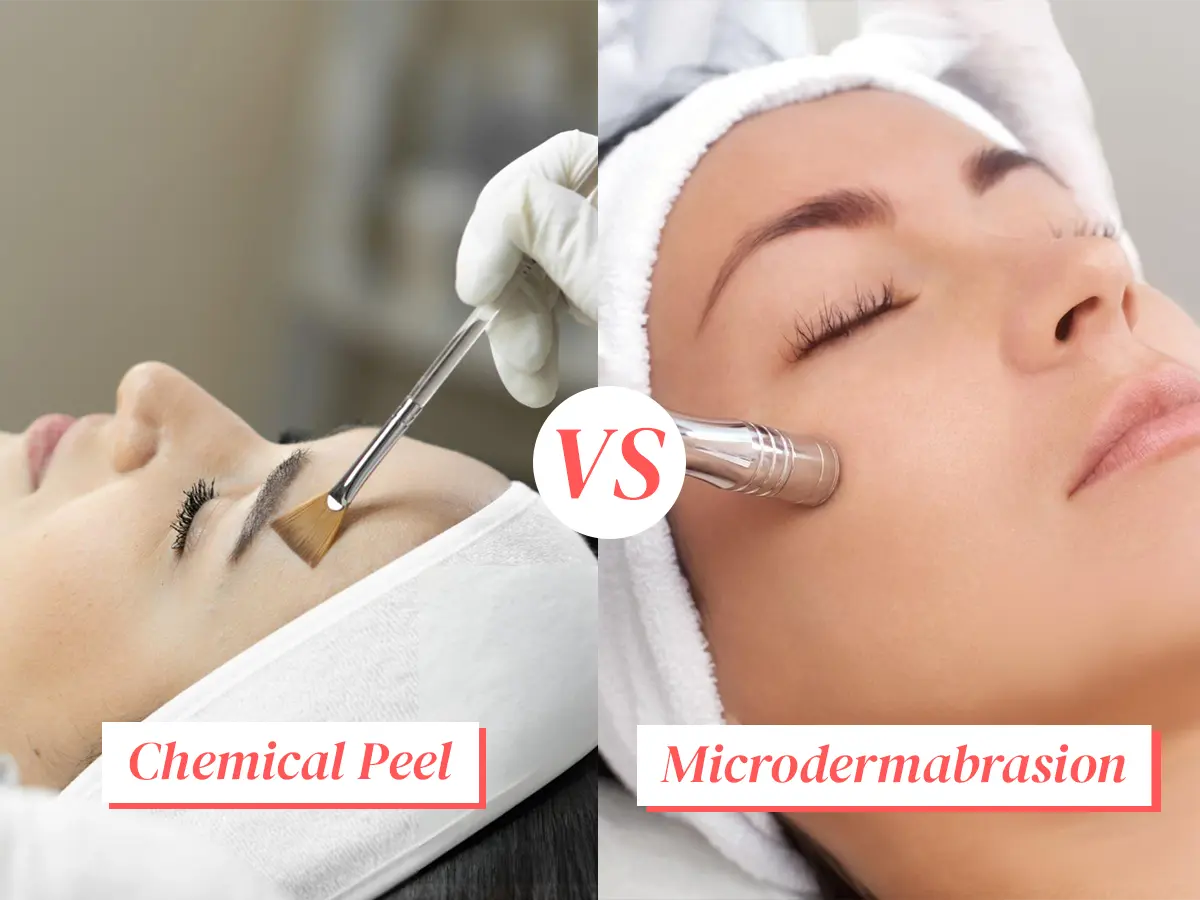
Chemical peels utilize controlled acid application causing graduated skin injury from superficial exfoliation to deep dermal remodeling, with outcomes determined by acid selection, concentration, pH, and application technique. Alpha hydroxy acids (glycolic, lactic) break desmosomes between corneocytes. Beta hydroxy acids (salicylic) penetrate sebaceous follicles. Trichloroacetic acid (TCA) denatures proteins causing coagulation. Phenol creates deep protein coagulation approaching surgical depths. Each acid type produces distinct effects through different mechanisms requiring appropriate selection for specific concerns. Superficial peels (glycolic 20-30%, salicylic 20-30%, lactic 30-50%) affect stratum corneum through epidermis, causing mild desquamation over 3-5 days. These light peels improve texture, minor pigmentation, and active acne through enhanced cell turnover and follicular clearing. Recovery involves mild flaking manageable with moisturizer. Results last 3-4 weeks requiring monthly repetition. Most patients tolerate these concentrations with minimal discomfort using topical numbing.Chemical peel depth classifications:
- Very superficial: Stratum corneum only
- Superficial: To basal layer (0.06mm)
- Medium: To papillary dermis (0.45mm)
- Deep: To reticular dermis (0.6mm+)
- pH ranges: 1.5-4.0 depending on acid
- Frosting levels: None to Level III
Microdermabrasion Physics
Microdermabrasion mechanically exfoliates superficial skin layers through controlled abrasion using crystal particles or diamond tips, removing 10-15 microns of stratum corneum per pass. Aluminum oxide crystals (100-200 microns) propelled by compressed air create controlled sandblasting effect. Diamond tip handpieces provide friction-based exfoliation without particles. Both methods couple with vacuum suction (20-30 mmHg) removing cellular debris while stimulating circulation. This purely mechanical approach avoids chemical exposure benefiting sensitive individuals. The treatment process involves systematic passes across facial zones using consistent pressure and overlap patterns ensuring uniform exfoliation. Crystal systems require 8-12 passes achieving desired depth. Diamond tips need 3-4 passes with varying grit levels (100-200 grit typically). Vacuum intensity adjusts for different areas—higher for thick skin, reduced around eyes. Treatment duration ranges 20-30 minutes for full face. Immediate erythema indicates adequate treatment depth without excessive trauma.Microdermabrasion parameters:
- Crystal size: 100-200 microns typically
- Crystal flow rate: 50-150 gm/minute
- Vacuum pressure: 20-30 mmHg standard
- Diamond grit: 100-200 for facial use
- Removal depth: 10-15 microns per pass
- Treatment passes: 3-12 depending on system
Comparative Depth and Healing
Understanding penetration depths reveals why different modalities suit specific concerns, with Hydrafacial affecting only outermost layers (0.05-0.1mm), microdermabrasion reaching superficial epidermis (0.1-0.2mm), and chemical peels ranging from superficial to deep dermal penetration (0.06-0.6mm+). These depth differences determine biological responses, healing requirements, and achievable outcomes. Superficial treatments provide temporary cosmetic improvement. Deeper interventions stimulate lasting structural changes. Patient selection must match concern depth with treatment capability. Healing cascades vary dramatically between modalities based on tissue injury extent. Hydrafacial causes minimal trauma requiring no true healing phase—mild erythema resolves within hours. Microdermabrasion triggers superficial wound healing completed within 3-5 days through rapid re-epithelialization. Chemical peels initiate complex inflammatory cascades proportional to depth—superficial peels heal through desquamation while deep peels require granulation tissue formation. These healing differences determine downtime, complication risks, and result durability.Depth-dependent healing timelines:
- Hydrafacial: 2-24 hours mild redness
- Light microderm: 2-3 days flaking
- Aggressive microderm: 3-5 days peeling
- Superficial peel: 3-5 days desquamation
- Medium peel: 7-10 days crusting/peeling
- Deep peel: 14-21 days re-epithelialization
Ingredient Science and Formulations
Hydrafacial’s proprietary solutions contain relatively standard ingredients at conservative concentrations designed for universal tolerance rather than aggressive correction. The GlySal cleansing solution combines 7.5% glycolic acid with 2% salicylic acid—concentrations available in over-the-counter products. Beta-HD serum adds higher salicylic concentration for extraction. Antiox+ contains generic antioxidants (vitamins A, E, white tea). These formulations prioritize safety over efficacy, explaining modest results compared to medical-grade alternatives. Chemical peel formulations demonstrate vast complexity beyond simple acid percentages, with pH, vehicle, and additives dramatically affecting penetration and outcomes. Buffered versus unbuffered acids show different efficacy at identical concentrations. Alcohol vehicles enhance penetration while gel formulas provide controlled release. Kojic acid additions target pigmentation. Retinoic acid combinations deepen effects. These nuanced formulations require expertise selecting appropriate options for specific concerns and skin types.Key ingredient comparisons:
- Glycolic acid: Smallest molecule, deepest penetration
- Lactic acid: Larger, gentler, hydrating
- Salicylic acid: Lipophilic, penetrates pores
- Mandelic acid: Large molecule, gentle action
- TCA: Protein precipitation, predictable depth
- Jessner’s: Combination enhancing penetration
How to Choose: Matching Treatment to Specific Concerns
Acne and Congestion Solutions
Active acne requires careful modality selection avoiding treatments that spread infection or trigger inflammatory responses worsening breakouts, with salicylic acid chemical peels providing superior outcomes compared to mechanical extraction or abrasion. Salicylic acid’s lipophilic nature enables follicular penetration dissolving comedones while anti-inflammatory properties reduce papulopustular lesions. Concentrations of 20-30% applied bi-weekly clear active breakouts while preventing new formation. This targeted approach surpasses Hydrafacial’s superficial extraction or microdermabrasion’s surface exfoliation for inflammatory acne. Comedonal acne (blackheads and whiteheads) responds well to combination approaches utilizing Hydrafacial extraction followed by salicylic peels maintaining clearance. The vacuum extraction removes existing comedones atraumatically compared to manual extraction. Subsequent chemical exfoliation prevents reformation through enhanced desquamation. This sequential treatment addresses both existing and developing lesions. However, clinical skincare research indicates prescription retinoids provide superior long-term control compared to procedural interventions.Acne treatment selection criteria:
- Active inflammatory: Salicylic peels only
- Comedonal: Hydrafacial plus peels
- Cystic: Avoid all, refer for medical treatment
- Scarring: TCA peels or laser resurfacing
- Maintenance: Monthly light peels
- Sensitive acne: Mandelic acid peels
Pigmentation and Melasma Management
Hyperpigmentation treatment selection depends critically on depth and etiology, with superficial sun spots responding to different modalities than dermal melasma requiring specialized approaches avoiding heat and inflammation. Superficial pigmentation from sun damage responds well to glycolic or TCA peels removing pigmented keratinocytes. Hydrafacial provides minimal pigmentation improvement through mild exfoliation. Microdermabrasion gradually fades superficial spots through serial treatments. However, dermal pigmentation requires targeted ingredients rather than mechanical removal. Melasma represents the most challenging pigmentation disorder, worsening with heat, inflammation, and aggressive treatments that standard protocols recommend. Hydrafacial’s vacuum and friction generate heat potentially triggering melasma. Standard glycolic peels cause inflammation worsening pigmentation. Microdermabrasion trauma stimulates melanocyte activity. Successful melasma treatment requires gentle approaches using kojic acid, mandelic acid, or modified Jessner’s peels avoiding inflammatory responses. The skin aging science emphasizes melasma’s complexity requiring combination topical therapy rather than aggressive procedures.Pigmentation treatment guidelines:
- Sun spots: Glycolic/TCA peels effective
- Melasma: Gentle peels, avoid heat/trauma
- PIH: Time plus gentle exfoliation
- Age spots: IPL superior to resurfacing
- Drug-induced: Avoid treatment, wait resolution
- Hormonal: Address underlying cause first
Anti-Aging and Texture Refinement
Age-related concerns require matching treatment depth to specific issues, with superficial fine lines responding to light resurfacing while deep wrinkles demand aggressive remodeling beyond any resurfacing modality’s capability. Hydrafacial temporarily plumps fine lines through hydration lasting 3-5 days. Light peels improve texture and superficial lines through enhanced turnover. Microdermabrasion refines texture providing modest line softening. Medium peels stimulate significant collagen production reducing moderate wrinkles. Deep wrinkles require injectable fillers or surgical intervention regardless of resurfacing intensity. Skin texture changes from photodamage respond excellently to serial light peels or microdermabrasion removing accumulated damage while stimulating renewal. Rough texture from keratinization improves with glycolic acid normalizing desquamation. Large pores appear refined through salicylic acid clearing debris. Dull complexion brightens via removal of light-absorbing dead cells. These textural improvements provide significant aesthetic enhancement despite modest structural change. Serial treatments every 3-4 weeks maintain optimal texture.Anti-aging treatment hierarchy:
- Prevention: Sunscreen plus retinoids
- Early signs: Light peels monthly
- Moderate aging: Medium peels quarterly
- Advanced aging: Combination with injectables
- Maintenance: Hydrafacial or light peels
- Severe laxity: Surgical intervention required
Sensitive Skin and Rosacea Considerations
Sensitive skin requires modified protocols prioritizing barrier protection over aggressive correction, with many standard treatments contraindicated due to triggering prolonged inflammation, redness, and irritation cycles. Hydrafacial performed with gentle vacuum settings and cooling serums provides safe exfoliation for most sensitive types. Lactic acid peels at low concentrations offer exfoliation with hydrating benefits. Microdermabrasion usually proves too aggressive causing extended erythema. Treatment selection emphasizes gradual improvement through multiple gentle sessions rather than aggressive single treatments. Rosacea patients face particular challenges with resurfacing treatments potentially triggering severe flares lasting weeks. The vacuum and friction from Hydrafacial can initiate flushing. Chemical peels cause inflammatory responses worsening baseline erythema. Microdermabrasion’s mechanical trauma directly triggers rosacea flares. Successful rosacea management requires identifying individual triggers, using anti-inflammatory protocols, and accepting limited treatment options. Many rosacea patients achieve better results from prescription medications than cosmetic procedures.Sensitive skin treatment modifications:
- Reduced concentrations (50% of standard)
- Shorter application times
- Increased neutralization speed
- Enhanced barrier repair post-treatment
- Extended intervals between sessions
- Avoidance during flare periods
Realistic Outcome Expectations
Setting appropriate expectations requires honest discussion of achievable improvements versus marketing promises, with most patients achieving 20-40% improvement in primary concerns through serial treatments rather than dramatic transformation from single sessions. Hydrafacial provides temporary glow lasting days, not permanent refinement. Chemical peels improve texture and pigmentation gradually over multiple sessions. Microdermabrasion offers refreshing rather than correcting effects. These realistic outcomes satisfy patients understanding limitations while disappointing those expecting miracles. Photographic documentation using standardized methods reveals true improvement beyond subjective perception. Consistent lighting eliminates shadows creating false improvement. Identical positioning enables accurate comparison. High-resolution imaging captures subtle changes. Serial photos throughout treatment courses document progressive improvement. This objective assessment prevents both false satisfaction and unwarranted disappointment. Patients seeing documented improvement report higher satisfaction despite modest changes.Realistic improvement ranges by concern:
- Fine lines: 20-30% reduction
- Pigmentation: 40-60% improvement
- Texture: 30-50% refinement
- Acne: 50-70% reduction (with medical therapy)
- Pore size: 10-20% apparent reduction
- Radiance: Temporary 3-5 days
MD Spa’s Resurfacing Treatment Excellence
Comprehensive Skin Analysis
MD Spa begins every resurfacing treatment journey with thorough multi-dimensional skin analysis exceeding standard visual assessment, utilizing advanced diagnostic technology revealing underlying conditions invisible to naked eye observation. The VISIA complexion analysis captures standardized photography under multiple light spectrums identifying UV damage, vascular patterns, porphyrin levels indicating bacteria, and subsurface pigmentation predicting future spots. This objective analysis guides treatment selection based on actual skin condition rather than subjective interpretation. Wood’s lamp examination reveals pigmentation depth distinguishing epidermal from dermal discoloration, critical for treatment planning since superficial and deep pigmentation respond to different modalities. Epidermal pigmentation fluoresces under UV light indicating responsiveness to exfoliation. Dermal pigmentation appears unchanged suggesting need for alternative approaches. Mixed patterns require combination protocols. This diagnostic precision prevents treating melasma with approaches that worsen the condition.Diagnostic assessments performed:
- VISIA complexion analysis imaging
- Wood’s lamp pigmentation mapping
- Skin elasticity measurements
- pH testing for barrier function
- Sensitivity testing protocols
- Microscopic comedone evaluation
- Historical reaction documentation
Customized Treatment Protocols
MD Spa’s treatment protocols reflect accumulated experience treating diverse skin types rather than following manufacturer’s generic recommendations, with parameters adjusted based on individual response patterns documented through careful observation. Initial conservative approaches establish baseline tolerance. Gradual intensity increases maximize results without complications. Response monitoring guides protocol adjustments. This iterative refinement achieves optimal outcomes while minimizing adverse events compared to aggressive standardized approaches. Chemical peel protocols vary dramatically based on skin type, concern, and tolerance demonstrated through patch testing. Fitzpatrick I-II skin might tolerate 30% glycolic immediately while Type IV requires starting at 20% with careful monitoring. Melasma patients receive modified Jessner’s avoiding post-inflammatory hyperpigmentation. Acne protocols emphasize salicylic acid with antibacterial additives. Each protocol undergoes customization based on individual factors rather than cookbook approaches.Customization factors considered:
- Baseline skin sensitivity scores
- Previous treatment responses
- Seasonal considerations
- Concurrent medications
- Healing capacity assessment
- Lifestyle limitations
- Budget and time constraints
Advanced Treatment Techniques
MD Spa’s providers undergo extensive training beyond basic certification, mastering advanced techniques that significantly improve outcomes while reducing complications compared to standard application methods. Chemical peel application uses feathering techniques ensuring even distribution without overlap burns. Cross-hatching patterns prevent pooling in facial creases. Anatomical knowledge guides varying application by facial zone. These refinements require hundreds of treatments developing expertise beyond weekend training courses. Extraction techniques during Hydrafacial treatments maximize comedone removal while minimizing trauma and spreading of infection. Proper angulation follows follicle direction. Appropriate vacuum intensity clears without causing broken capillaries. Systematic patterns ensure complete treatment. Post-extraction protocols prevent immediate refilling. These technical details separate medical results from spa facials despite using identical equipment.Advanced technique elements:
- Anatomical variation accommodation
- Feathering and blending methods
- Neutralization timing precision
- Layer building for depth control
- Combination sequencing optimization
- Complication recognition and management
Results Optimization Programs
MD Spa’s treatment programs extend beyond individual sessions through comprehensive protocols preparing skin before treatment and maintaining results afterward, achieving 40-60% better outcomes compared to standalone treatments. Pre-treatment preparation using medical-grade skincare primes skin for optimal response. Retinoids accelerate cellular turnover. Hydroquinone reduces pigmentation activity. Barrier repair strengthens resilience. This preparation phase lasting 2-4 weeks dramatically improves treatment tolerance and results. Integrated skincare programs bridge professional treatments maintaining and extending improvements between sessions. Customized regimens address specific concerns while supporting overall skin health. Medical-grade products provide therapeutic concentrations unavailable over-the-counter. Regular adjustments accommodate seasonal changes and evolving needs. This comprehensive approach transforms temporary treatment effects into lasting improvement through consistent maintenance.Program components included:
- Pre-treatment preparation protocols
- Customized home care regimens
- Medical-grade product access
- Progress monitoring appointments
- Protocol adjustments as needed
- Maintenance scheduling optimization
- Long-term planning guidance
Frequently Asked Questions
Hormonal acne characterized by deep cystic lesions along jawline and chin responds better to salicylic acid chemical peels addressing inflammation while regular comedonal acne benefits from Hydrafacial’s extraction capabilities, though both require concurrent medical therapy for optimal clearance. Hormonal acne’s inflammatory nature contraindicates aggressive mechanical extraction which spreads infection and triggers additional inflammation, making chemical exfoliation with anti-inflammatory salicylic acid at 20-30% concentration the preferred approach, performed every 2-3 weeks during initial clearance. Regular blackheads and whiteheads respond well to Hydrafacial’s vacuum extraction removing existing comedones while gentle acid solutions prevent reformation, though dermatology research confirms prescription retinoids provide superior long-term control compared to any procedural intervention alone, making professional treatments adjunctive rather than primary therapy.
Combining Hydrafacial with chemical peels requires careful timing and selection to avoid excessive irritation while potentially enhancing results through complementary mechanisms, with sequential treatments spaced appropriately proving safer and more effective than same-day combinations. Hydrafacial performed 5-7 days before a chemical peel removes surface debris enhancing penetration, while performing it 1-2 weeks after helps restore hydration during healing, but same-session combination risks severe irritation from cumulative barrier disruption. The clinical skincare research indicates combination protocols show marginal superiority over optimized monotherapy while significantly increasing adverse event risks, making sequential treatments preferable for most patients, though experienced providers might safely combine very gentle modalities for specific indications.
Realistic result duration varies dramatically between treatments with Hydrafacial providing 5-7 days of enhanced hydration and glow, superficial chemical peels lasting 3-4 weeks, medium peels maintaining improvement 2-3 months, and microdermabrasion effects persisting 2-3 weeks, all requiring ongoing maintenance for sustained benefits. The temporary nature reflects skin’s continuous renewal cycle replacing treated cells within 28-45 days regardless of treatment quality, while deeper treatments stimulating collagen provide longer duration through structural rather than surface changes. According to aesthetic medicine guidelines, patients discontinuing maintenance see 80% regression to baseline within 6-12 months as natural aging and environmental damage resume, making these treatments temporary management rather than permanent correction regardless of marketing claims.
Hydrafacial provides the least downtime with mild redness resolving within 2-24 hours making it ideal for events within 1-2 days, though optimal timing remains 3-5 days prior allowing any sensitivity to completely resolve while maintaining maximum glow. Light enzyme peels or very superficial glycolic peels (20% or less) cause minimal peeling manageable with makeup after 48 hours. Gentle microdermabrasion creates 24-48 hours of mild redness and sensitivity. However, individual responses vary significantly—some experience prolonged redness from gentle treatments while others tolerate aggressive protocols with minimal reaction. The treatment safety protocols recommend scheduling any resurfacing treatment at least one week before important events accounting for potential adverse reactions, with two weeks preferable for first-time treatments where response patterns remain unknown.
Individual variation in resurfacing treatment response reflects complex interactions between skin physiology, healing capacity, concurrent skincare, lifestyle factors, and realistic expectations, with 30% showing excellent response, 50% achieving moderate improvement, and 20% experiencing minimal change from identical protocols. Genetic factors determine cellular turnover rates, collagen quality, and inflammatory responses varying 10-fold between individuals. Skin condition at baseline affects improvement potential—healthy skin shows less dramatic change than damaged skin. Compliance with pre and post-treatment protocols dramatically impacts outcomes. According to dermatology research, lifestyle factors including sun protection, smoking cessation, nutrition, and stress management account for 40% of result variation, while appropriate patient selection and customized protocols explain another 30%, leaving only 30% to actual treatment execution, explaining why identical treatments produce vastly different outcomes.