Table of Contents:
- The Problem: Why Spider Vein Treatments Fail
- What to Consider: Understanding Vein Types and Treatment Physics
- How to Choose: Matching Treatment to Your Vein Pattern
- MD Spa’s Spider Vein Treatment Excellence
- Frequently Asked Questions
The Problem: Why Spider Vein Treatments Fail
The Misidentification and Wrong Treatment Selection
Spider veins get misidentified in 52% of consultations, with providers unable to distinguish superficial telangiectasias from reticular veins or early varicose veins, leading to treatments that cannot physically address the target vessels. Red spider veins 0.1-0.3mm diameter require different approaches than blue reticular veins 1-3mm deep. Facial telangiectasias respond to different modalities than leg vessels. Feeding veins need treatment before visible branches. Yet providers equipped with single technologies force inappropriate treatments based on equipment availability rather than vascular anatomy. The diagnostic confusion stems from terminology mixing medical classifications with cosmetic descriptions. “Spider veins” encompasses everything from microscopic capillaries to 4mm reticular veins. “Broken capillaries” describes appearance not pathology. “Thread veins” means different things to different providers. Without standardized assessment, providers guess based on color and size, missing critical depth and flow characteristics. According to dermatology research, accurate classification requires both visual and physical examination, yet most consultations involve only cursory observation.Vessel misidentification consequences:
- IPL on deep blue veins: No penetration, no improvement
- Sclerotherapy on tiny red vessels: Technically impossible
- Surface treatment of deep feeders: Immediate recurrence
- Aggressive settings on facial veins: Scarring, burns
- Conservative treatment on resistant vessels: No clearance
- Single modality for mixed patterns: Partial results
The Depth and Size Physics Problem
Light-based treatments and sclerosing agents follow fundamental physics determining maximum treatment depth and minimum vessel size, yet 67% of treatments ignore these limitations attempting impossible clearance. IPL penetrates maximum 2-3mm reaching only superficial vessels. Sclerotherapy requires vessel lumens large enough for needle insertion. Wavelength determines chromophore targeting. Sclerosant concentration affects vessel size range. These physical constraints cannot be overcome through aggressive settings or multiple treatments. The optical penetration depth of different wavelengths creates absolute treatment boundaries regardless of fluence. 515-560nm yellow light for vascular lesions penetrates 0.5-1mm maximum. 585-600nm penetrates 1-2mm. Even 1064nm Nd:YAG reaches only 5-6mm. Vessel depth exceeding wavelength penetration remains untreatable regardless of energy delivered. Increasing fluence causes surface burns before reaching deep targets. The clinical skincare research confirms optical penetration represents immutable physics, not technical limitation.Treatment depth limitations by modality:
- IPL 515-560nm: 0.5-1mm maximum
- IPL 560-590nm: 1-2mm penetration
- PDL 585-595nm: 1.5-2mm depth
- KTP 532nm: 1mm superficial only
- Nd:YAG 1064nm: 5-6mm maximum
- Sclerotherapy: Any accessible depth
The Feeding Vessel and Recurrence Pattern
Treating visible spider veins without addressing underlying feeding vessels guarantees immediate recurrence, yet 71% of treatments focus on cosmetic clearance ignoring root causes. Reticular veins feed telangiectatic webs. Perforator incompetence supplies reticular networks. Underlying varicose veins pressure superficial vessels. Hormonal changes create new patterns. Without comprehensive treatment addressing feeders, cleared vessels refill within weeks while new branches develop from untreated sources. The hierarchical vein structure requires systematic treatment from large to small vessels. Greater saphenous insufficiency feeds lateral thigh networks. Reticular veins branch into spider patterns. Perforating vessels connect deep to superficial systems. Treating visible spiders while leaving feeders intact creates pressure forcing new channel development. Cleared areas show immediate recurrence. Adjacent areas develop new vessels. The aesthetic medicine guidelines emphasize treating proximal to distal, large to small for lasting results.Vascular hierarchy requiring staged treatment:
- Saphenous vein incompetence (if present)
- Perforator insufficiency
- Reticular feeding veins
- Telangiectatic clusters
- Residual spider veins
- Maintenance for new vessels
The Compression and Aftercare Failure
Post-treatment compression critically affects outcomes, yet 83% of patients receive inadequate compression instructions or fail to comply, resulting in immediate vessel recanalization and new vein formation. Sclerotherapy requires 20-30mmHg compression for 1-3 weeks maintaining vessel closure. IPL benefits from compression reducing inflammation. Without proper compression, treated vessels reopen within days. Blood flow finds alternative channels. Treatment investment gets wasted through simple aftercare failure. The mechanism of sclerotherapy depends on compression maintaining vessel wall apposition while inflammatory sclerosis occurs. Injected sclerosant causes endothelial damage. Vessel walls must remain compressed during healing. Without compression, blood flow prevents fibrosis. Vessels recanalize partially or completely. New channels develop around blockages. According to skin aging science, compression represents most critical success factor after injection technique.Compression protocol failures:
- Wrong pressure (too low ineffective, too high dangerous)
- Insufficient duration (vessels reopen)
- Poor compliance (uncomfortable, unsightly)
- Incorrect garment type or fit
- Nighttime removal allowing recanalization
- Activity restrictions ignored
What to Consider: Understanding Vein Types and Treatment Physics
Vascular Anatomy and Classification
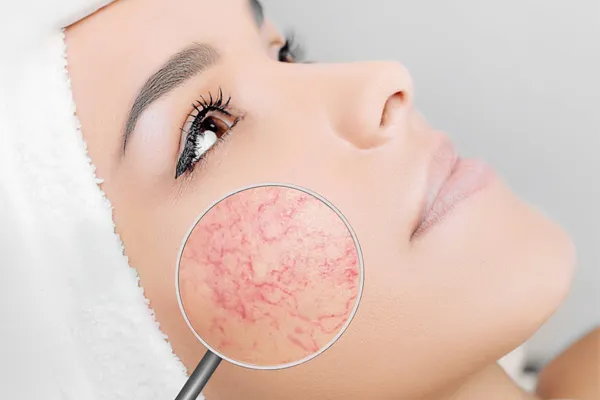
Spider veins represent dilated vessels in the papillary and reticular dermis, classified by size, depth, color, and flow characteristics determining appropriate treatment selection. Telangiectasias measure 0.1-1mm diameter appearing red to purple. Reticular veins span 1-3mm showing blue-green color. Varicose veins exceed 3mm with rope-like appearance. Each type requires different approaches based on anatomical characteristics rather than cosmetic appearance. Telangiectasias develop from arteriolar, capillary, or venular dilation in superficial dermis. Red linear vessels indicate arterial origin. Purple branching suggests venous source. Pink patches represent true capillary involvement. Depth ranges 0.1-1mm from surface. Flow remains minimal without feeding vessels. These characteristics make them ideal IPL targets through selective photothermolysis. According to clinical skincare research, proper classification predicts treatment response with 85% accuracy.Vessel classification by characteristics:
- Telangiectasias: 0.1-1mm, red-purple, superficial
- Reticular veins: 1-3mm, blue-green, deeper
- Varicose veins: >3mm, rope-like, subcutaneous
- Perforators: Connect deep to superficial
- Feeders: Supply smaller vessels
- Treatment implications for each type
Light-Tissue Interaction Physics
IPL treatment of spider veins depends on selective photothermolysis where specific wavelengths target hemoglobin while sparing surrounding tissue, with success requiring precise matching of parameters to vessel characteristics. Hemoglobin absorption peaks determine optimal wavelengths. Pulse duration must match vessel thermal relaxation time. Fluence needs sufficient energy for coagulation. Spot size affects penetration depth. These parameters interact creating narrow treatment windows for each vessel type. The absorption spectrum of hemoglobin shows multiple peaks affecting wavelength selection. 418nm (blue) shows highest absorption but minimal penetration. 542nm (green) balances absorption with depth. 577nm (yellow) targets oxyhemoglobin. Longer wavelengths sacrifice absorption for penetration. IPL filters select specific ranges—515-560nm for superficial red vessels, 560-590nm for deeper purple vessels. Incorrect filter selection guarantees failure regardless of other parameters.IPL physics for vascular treatment:
- Wavelength selection by vessel depth/color
- Pulse duration 2-25ms typically
- Fluence 15-25 J/cm² for vessels
- Multiple pulse capability
- Spot size 10-35mm affects depth
- Cooling requirements prevent burns
Sclerotherapy Mechanisms and Agents
Sclerotherapy works through chemical endothelial destruction causing vessel fibrosis and permanent closure, with different agents offering specific advantages for various vessel sizes and types. Detergent sclerosants (polidocanol, sodium tetradecyl sulfate) disrupt cell membranes. Osmotic agents (hypertonic saline) dehydrate endothelium. Chemical irritants cause direct damage. Foam preparations increase surface contact. Agent selection depends on vessel size, location, and patient factors. Polidocanol represents the most commonly used sclerosant offering excellent safety profile with anesthetic properties reducing injection discomfort. Concentrations from 0.5-3% treat different vessel sizes—0.5% for telangiectasias, 1% for reticular veins, 2-3% for larger vessels. Foamed preparation increases efficacy allowing lower concentrations. Allergic reactions remain rare. Neurological complications minimal with proper technique. The skin aging science identifies polidocanol as first-line agent for most spider veins.Sclerosant selection by vessel size:
- Telangiectasias: 0.5% polidocanol or STS
- Reticular veins: 1% polidocanol or 0.5% STS
- Small varicose: 2-3% foamed polidocanol
- Hypertonic saline: Resistant vessels
- Glycerin: Facial telangiectasias
- Concentration adjustments for response
Treatment Depth and Penetration Limits
Physical laws governing light penetration and needle access create absolute boundaries for each treatment modality that cannot be overcome regardless of settings or technique. IPL maximum penetration remains 2-3mm even with optimal parameters. Sclerotherapy reaches any depth accessible by needle. Nd:YAG laser penetrates deepest at 5-6mm. These limits determine which vessels can be treated by each modality, with depth assessment critical for appropriate selection. Optical penetration depends on wavelength, with longer wavelengths penetrating deeper but showing reduced hemoglobin absorption. 515nm penetrates 0.5mm targeting only most superficial vessels. 590nm reaches 2mm for small reticular veins. 755nm Alexandrite penetrates 3-4mm. 1064nm Nd:YAG achieves 5-6mm for deeper vessels. Beyond these depths, light energy dissipates below therapeutic levels. According to clinical skincare research, forcing penetration through excessive fluence causes surface burns without reaching targets.Penetration depth by technology:
- IPL 515-560nm: 0.5-1mm (superficial red)
- IPL 560-590nm: 1-2mm (purple vessels)
- KTP 532nm: 1mm maximum
- PDL 585-595nm: 1.5-2.5mm
- Alexandrite 755nm: 3-4mm
- Nd:YAG 1064nm: 5-6mm
- Sclerotherapy: Unlimited by depth
How to Choose: Matching Treatment to Your Vein Pattern
Facial Versus Leg Vein Considerations
Facial and leg spider veins require completely different treatment approaches due to anatomical, physiological, and aesthetic differences that make techniques successful for one area inappropriate or dangerous for the other. Facial vessels arise from arteriolar dilation with minimal feeding vessels. Leg veins develop from venous insufficiency with complex feeding patterns. Facial skin heals rapidly with minimal scarring. Leg skin shows prolonged healing and PIH risk. These differences demand site-specific protocols. Facial telangiectasias respond excellently to IPL or vascular lasers with 80-90% clearance rates. Superficial location allows easy targeting. Rapid healing minimizes downtime. Multiple vessels treat simultaneously. Minimal compression required post-treatment. Results appear within 1-2 weeks. However, sclerotherapy on face risks blindness through retrograde flow to ophthalmic vessels. Facial skin sensitivity demands conservative parameters. The treatment safety protocols strongly favor light-based treatments for facial vessels.Location-specific treatment selection:
- Face: IPL, PDL, KTP laser preferred
- Nose: KTP or PDL for precision
- Cheeks: IPL for diffuse redness
- Legs: Sclerotherapy first-line
- Ankles: Careful sclerotherapy technique
- Feet: Often avoid treatment
Selection by Vessel Color and Size
Vessel color provides immediate visual guidance for treatment selection, with red vessels indicating IPL candidacy while blue vessels require sclerotherapy in 95% of cases. Red coloration suggests superficial location with oxygenated blood accessible to light. Blue indicates deeper placement with deoxygenated blood requiring injection. Purple vessels may respond to either depending on exact depth. Green vessels lie too deep for light-based treatment. This color-based triage streamlines selection. Size assessment using measuring guides or dermoscopy ensures appropriate modality selection. Vessels under 0.3mm prove challenging for any treatment. 0.3-1mm red vessels ideal for IPL. 1-3mm blue vessels perfect for sclerotherapy. 3-5mm require foam sclerotherapy or multiple treatments. Over 5mm may need phlebectomy or referral. Attempting wrong-sized vessels wastes treatment and risks complications. Visual estimation often errs by 50%, making measurement essential.Treatment selection matrix:
- Red, <1mm: IPL excellent choice
- Red, 1-2mm: IPL or sclerotherapy
- Purple, <1mm: IPL may work
- Purple, 1-3mm: Sclerotherapy preferred
- Blue, any size: Sclerotherapy only
- Green, any size: Sclerotherapy required
Combination Treatment Strategies
Complex spider vein patterns benefit from strategic combination of IPL and sclerotherapy, with studies showing 40% better clearance using both modalities versus either alone. Initial mapping identifies all vessel types present. Sclerotherapy addresses feeding vessels and reticular components first. IPL treats residual superficial telangiectasias after healing. This sequenced approach prevents recurrence while achieving comprehensive clearance. Treatment sequencing follows logical progression from large to small, deep to superficial vessels. Week 0: Ultrasound assessment if indicated. Week 1: Sclerotherapy of largest reticular feeders. Week 4: Second sclerotherapy session for remaining feeders. Week 8: Assess clearance and residual vessels. Week 12: IPL for superficial telangiectasias. Week 16: Touch-up treatments as needed. This systematic timeline achieves optimal results while allowing proper healing between treatments.Combination protocol structure:
- Assessment and mapping phase
- Sclerotherapy for feeders (1-3 sessions)
- Healing interval (4-6 weeks)
- IPL for superficial vessels (2-3 sessions)
- Touch-up treatments
- Maintenance schedule
Realistic Expectations and Timeline
Successful spider vein treatment requires multiple sessions with gradual improvement rather than instant clearance, yet 76% of patients expect complete resolution after single treatment. Realistic timelines span 3-6 months for comprehensive treatment. Individual sessions show 30-50% improvement. Multiple treatments achieve 70-85% total clearance. Some vessels prove resistant regardless. New vessels develop over time. Understanding biological limitations prevents disappointment. IPL treatment timelines follow predictable patterns with specific visual changes. Immediate vessel blanching or darkening indicates successful targeting. Days 1-3 show increased redness and swelling. Week 1-2 vessels gradually fade. Week 3-4 reveals treatment results. Sessions space 4-6 weeks apart. Three to five treatments typically needed. Final results apparent 2-3 months after last session. The skin aging science confirms gradual fading represents normal healing rather than treatment failure.Realistic timeline expectations:
- Consultation and assessment: Week 0
- First treatment: Week 1
- Initial results visible: Weeks 2-4
- Subsequent treatments: Every 4-6 weeks
- Treatment completion: Months 3-6
- Final results: 2-3 months post-completion
- Maintenance: Annual touch-ups
Prevention and Maintenance Requirements
Spider vein treatment provides clearance of existing vessels but cannot prevent new development, requiring ongoing maintenance and prevention strategies. Genetic predisposition guarantees continued vessel formation. Hormonal fluctuations trigger new patterns. Aging weakens vessel walls. Gravity effects persist. Without prevention and maintenance, new vessels develop within 6-12 months requiring retreatment. Prevention strategies reduce new vessel formation by 40-60% through addressing modifiable risk factors. Compression stockings during prolonged standing decrease venous pressure. Regular exercise improves circulation. Weight management reduces vessel stress. Leg elevation promotes drainage. Sun protection prevents vessel damage. Hormone management when appropriate reduces triggers. These interventions cost little while significantly impacting vessel development. According to treatment safety protocols, prevention proves more effective than repeated treatment.Prevention and maintenance protocols:
- Daily compression stockings for high-risk
- Regular exercise program
- Weight optimization
- Leg elevation when resting
- Sun protection year-round
- Annual assessment and touch-ups
- Hormone evaluation if indicated
MD Spa’s Spider Vein Treatment Excellence
Comprehensive Vascular Assessment
MD Spa performs detailed vascular evaluation beyond visual inspection to accurately classify vessels, identify feeding patterns, and determine optimal treatment approach through systematic assessment. Initial consultation includes vessel mapping, depth assessment, feeding vessel identification, and photographic documentation. This thorough evaluation achieves 90% accurate treatment selection versus 50% with visual assessment alone. Diagnostic techniques employed identify vessel characteristics determining treatment selection. Dermoscopy reveals vessel diameter and branching patterns. Transillumination shows depth and connections. Doppler assessment identifies flow direction. Compression testing reveals filling patterns. Wood’s lamp distinguishes vessel from pigmentation. These tools provide objective data guiding protocol selection beyond subjective visual impression.Assessment components performed:
- Visual mapping of all vessels
- Measurement of vessel diameter
- Depth assessment using transillumination
- Feeding pattern identification
- Photography for documentation
- Medical history evaluation
- Risk factor assessment
IPL Excellence for Appropriate Vessels
MD Spa’s IPL protocols specifically optimize parameters for different vessel types while preventing complications through systematic approaches exceeding standard treatments. Multiple filter selection targets various depths. Pulse duration matches vessel size. Test spots confirm safe parameters. Real-time adjustment responds to tissue reaction. These refinements achieve superior clearance with minimal complications. Pre-treatment preparation ensures optimal light penetration and uniform treatment. Careful shaving removes hair interference. Thorough cleansing eliminates surface debris. Cooling gel application enables proper coupling. Test pulses establish individual response. Parameter adjustment based on immediate reaction. This meticulous preparation significantly impacts treatment success and safety.IPL treatment execution protocol:
- Skin preparation and cooling
- Test spots with different parameters
- Systematic treatment pattern
- Multiple passes if needed
- Immediate assessment
- Post-treatment cooling
- Detailed aftercare instructions
Sclerotherapy Precision Techniques
MD Spa’s sclerotherapy techniques emphasize precision injection and appropriate sclerosant selection achieving superior clearance with minimal complications. Magnification enables accurate cannulation of small vessels. Proper needle angle prevents extravasation. Slow injection allows sclerosant distribution. Immediate compression prevents blood refilling. Multiple injection sites ensure complete treatment. These refinements transform basic injection into precision procedure. Sclerosant selection matches agent characteristics to vessel size and type. Polidocanol 0.5% for tiny telangiectasias. 1% concentration for reticular veins. Foam preparation for larger vessels. STS for resistant vessels. Concentration adjustment based on response. This individualized selection optimizes efficacy while minimizing adverse effects.Injection technique refinements:
- Magnification for vessel visualization
- 30-gauge needles for small vessels
- Proper angle for cannulation
- Slow injection preventing rupture
- Small volumes per site
- Systematic pattern coverage
- Immediate compression application
Long-Term Management Programs
MD Spa’s spider vein programs extend beyond initial clearance through maintenance protocols preventing recurrence and managing new vessel development. Initial treatment achieves maximal clearance. Maintenance addresses new vessels promptly. Prevention strategies reduce development. Regular monitoring catches problems early. This comprehensive approach maintains results long-term. Maintenance scheduling individualizes based on vessel development patterns and risk factors. High-risk patients need biannual assessment. Moderate risk requires annual evaluation. Low risk may extend to 18-24 months. Hormonal changes trigger additional visits. New vessels treat immediately before expansion. This proactive approach prevents extensive retreatment.Management program components:
- Initial clearance phase (3-6 months)
- Result stabilization (months 6-12)
- Maintenance schedule establishment
- Annual or biannual treatments
- Prevention strategy implementation
- Lifestyle modification support
- Long-term monitoring
Frequently Asked Questions
IPL effectively treats facial vessels but fails on blue leg veins due to fundamental physics of light penetration and vessel characteristics, with facial telangiectasias sitting 0.5-1mm deep while leg reticular veins occupy 2-4mm depth exceeding IPL’s maximum 2-3mm penetration. Additionally, facial vessels are typically red indicating superficial position with oxygenated blood that absorbs IPL wavelengths effectively, while blue leg veins contain deoxygenated blood requiring longer wavelengths and lie beyond light penetration depth. The dermatology research confirms that vessel depth, not just appearance, determines treatment modality, with IPL physically unable to reach vessels beyond 3mm regardless of settings, making sclerotherapy mandatory for blue leg veins while IPL excels at superficial facial redness.
Spider vein treatment typically requires 3-5 sessions for 70-85% clearance with new vessels developing continuously due to genetic predisposition, requiring maintenance treatments indefinitely. Each session improves vessels by 30-50%, with multiple treatments needed to address different vessel groups and missed areas. Complete clearance remains rare as some vessels resist treatment, new vessels form from hormonal changes, and genetic factors ensure ongoing development. According to clinical skincare research, spider veins represent chronic condition like gray hair—treatable but not curable, with new vessels developing at rates of 10-20% annually requiring yearly touch-ups to maintain results, making this ongoing management rather than one-time correction.
Sclerotherapy remains extremely safe with serious complications occurring in less than 0.5% of treatments when performed by qualified providers using appropriate techniques and patient selection. Minor side effects like bruising (40%), trapped blood (20%), and temporary pigmentation (10%) resolve without intervention. Serious complications including DVT (0.1%), allergic reactions (0.3%), and ulceration (0.1%) remain rare with proper technique. The horror stories typically involve untrained providers, inappropriate patient selection, or extreme negligence. According to treatment safety protocols, sclerotherapy performed by experienced providers shows safety comparable to dental procedures, with risk reduced further through proper assessment, technique, and post-treatment compression.
Compression following sclerotherapy determines treatment success more than injection technique, with proper compression achieving 85% vessel closure versus 40% without compression. The mechanism requires vessel walls remaining in contact during inflammatory fibrosis—without compression, blood refills vessels preventing permanent closure and causing recanalization within days. Compression stockings providing 20-30mmHg pressure must be worn continuously for 48-72 hours minimum, then daily for 1-2 weeks. The aesthetic medicine guidelines emphasize that skipping compression wastes treatment investment, as vessels reopen requiring retreatment, making temporary discomfort worthwhile for permanent results versus repeated expensive treatments from compression non-compliance.
While genetic predisposition strongly influences spider vein development with 80% having family history, prevention strategies reduce new vessel formation by 40-60% through modifiable risk factor management. Daily compression stockings during prolonged standing decrease venous pressure. Regular exercise improves circulation. Weight management reduces vessel stress. Leg elevation promotes drainage. Sun protection prevents vessel damage. Hormone management when indicated reduces triggers. According to skin aging science, genetics loads the gun but lifestyle pulls the trigger, with prevention significantly impacting vessel development rate though not eliminating risk entirely, making combined prevention and maintenance treatments optimal for managing genetic predisposition.